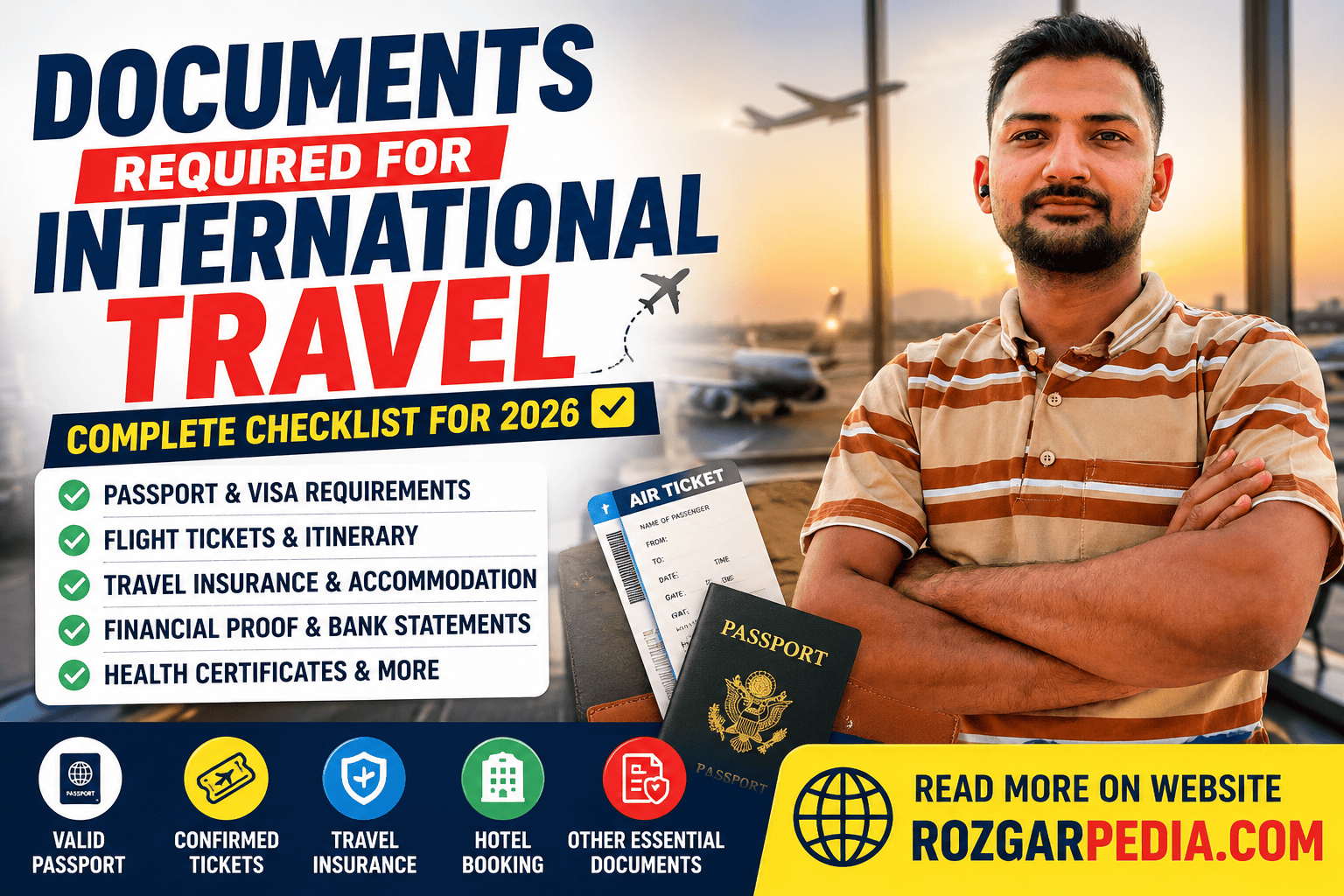
International travel can be exciting, whether you are going abroad for a holiday, employment, education, business, or to visit family. But before heading to the airport, one thing deserves your full attention your travel documents.
A missing or incorrect document can create problems during check-in, boarding, transit, or immigration. Airlines and border authorities may check whether you have the documents required for your particular destination and nationality.
The important point is that there is no single document checklist that applies to every international traveler. Requirements can change according to your passport, destination, visa type, purpose of travel, and transit route.
In this guide, we explain the most common documents you may need for international travel and how to check the requirements before leaving.
What Documents Do You Need for International Travel?
The exact documents depend on your trip, but most international travelers should prepare the following:
- Valid passport
- Visa or electronic travel authorization, when required
- Flight reservation or ticket
- Proof of accommodation, when applicable
- Travel insurance, when required or recommended
- Financial documents, if required by the destination
- Health or vaccination documents, if applicable
- Invitation letter for certain visits
- Employment or study documents, depending on the purpose of travel
- Copies of important documents
You should always confirm the exact requirements for your own journey instead of assuming that every country follows the same rules.
1. Valid Passport
Your passport is normally the most important document for international travel. It identifies you as a citizen or national of your country and is used by airlines and immigration authorities during your journey.
Before travelling, check:
- Passport expiry date
- Name and date of birth
- Passport number
- Physical condition of the passport
- Available visa pages where applicable
Some destinations require your passport to remain valid for a certain period after arrival. Six months is a common requirement in some destinations, but it is not a universal rule.
For example, official U.S. travel guidance notes that some destinations require six months of remaining passport validity, while requirements can differ by country.
For this reason, check the specific requirement for your destination before travelling.
2. Visa or Electronic Travel Authorization
Depending on your nationality and destination, you may need a visa or an electronic travel authorization before departure.
Common travel permissions include:
- Tourist visa
- Work visa
- Student visa
- Business visa
- Family visit visa
- Transit visa
- Electronic visa
- Electronic travel authorization
Do not assume that having a passport automatically gives you permission to enter another country.
The visa requirement can depend on your nationality, purpose of travel, length of stay and destination.
For the most current requirements, check the destination country’s official immigration or embassy website. You can also use the IATA Travel Centre, which provides personalized passport, visa and health requirement information.
3. Flight Ticket and Travel Itinerary
Keep your flight reservation or ticket accessible before leaving for the airport.
Your travel information may include:
- Departure date
- Flight number
- Departure airport
- Arrival airport
- Connecting flights
- Return or onward journey
Some countries may ask travelers to provide evidence of onward or return travel, depending on their immigration rules.
If you have connecting flights, pay attention to the transit country as well. You may need additional documents or a transit visa depending on your nationality and itinerary.
4. Proof of Accommodation
Depending on the destination and visa conditions, you may be asked to show where you will stay.
Possible documents include:
- Hotel reservation
- Hostel booking
- Rental accommodation confirmation
- Invitation from a host
- Address of family or friends
This requirement is not the same for every country, so check your destination’s current entry rules before departure.
5. Travel Insurance
Travel insurance is not universally mandatory, but some destinations or visa categories may require it.
Even where it is not compulsory, suitable travel insurance can provide useful protection during a trip.
Depending on the policy, coverage may include:
- Emergency medical treatment
- Hospital expenses
- Trip cancellation
- Lost baggage
- Travel delays
- Emergency assistance
If your visa application requires insurance, check the minimum coverage and policy conditions carefully.
Keep the insurance certificate and emergency contact information available while travelling.
6. Proof of Financial Means
Some countries may require visitors to demonstrate that they have enough money to support themselves during their stay.
Depending on the destination, acceptable evidence may include:
- Bank statements
- Credit card information
- Sponsorship documents
- Employment evidence
- Other financial documents specified by the immigration authority
7. Health and Vaccination Documents
Health requirements depend on your destination, nationality, travel history and current regulations.
Some travelers may need:
- Vaccination certificates
- Medical certificates
- Health declarations
- Other health-related documentation
Certain countries can have specific vaccination requirements for travelers arriving from particular countries or regions.
Because health requirements can change, check the latest information close to your departure date.
The IATA Travel Centre provides passport, visa and health requirement information based on the traveler’s details and itinerary.
8. Invitation Letter
An invitation letter may be relevant when travelling for certain purposes, such as visiting family, attending a business event, or staying with a host.
Depending on the country, the letter may contain:
- Host’s name
- Address
- Contact details
- Purpose of the visit
- Expected duration of stay
- Relationship with the traveler
- Accommodation details
Whether an invitation letter is actually required depends on the destination and visa category.
Do not create or submit a fake invitation letter. If a genuine invitation is required, obtain it from the appropriate person or organization.
9. Employment or Work Documents
If you are travelling abroad for employment, you may need additional documents beyond a passport and visa.
Depending on your situation, these could include:
- Employment contract
- Job offer
- Work visa
- Work permit information
- Employer details
- Recruitment documents
- Required pre-departure clearance
For Pakistani workers travelling abroad for employment, document requirements can include additional steps related to overseas employment and departure procedures. You can read our guide on the Protector Registration for Work Visa Travel for more information.
You can also read our Complete Overseas Employment Guide for Pakistanis for a broader overview of the overseas employment process.
10. Study or Business Travel Documents
Students and business travelers may need additional documents depending on the purpose of their trip.
Students may need:
- Student visa
- Admission letter
- Enrollment confirmation
- Accommodation details
- Financial documents
Business travelers may need:
- Business invitation
- Conference or event registration
- Employer letter
- Meeting details
- Accommodation information
Always follow the document list provided by the relevant embassy or immigration authority.
11. International Driving Permit
If you plan to drive during your trip, check whether your destination recognizes your domestic driving license or requires an International Driving Permit.
Depending on the country, you may need:
- Valid domestic driving license
- International Driving Permit
- Passport
- Vehicle rental documents
- Insurance
Driving requirements differ between countries, so confirm the rules before renting or driving a vehicle abroad.
12. Copies of Your Important Documents
Keeping backup copies of important documents is a simple but useful travel habit.
Consider keeping copies of:
- Passport
- Visa
- Flight booking
- Travel insurance
- Hotel reservation
- ID card
- Employment documents
- Emergency contacts
You can keep one physical copy separately from the originals and another secure digital copy.
The U.S. Department of State also recommends making multiple copies of required travel documents and keeping copies separate from the originals.
Do not store sensitive documents in an unsecured public location.
13. Emergency Contact Information
Create a small emergency information sheet before travelling.
It can include:
- Family contact numbers
- Embassy or consulate details
- Travel insurance emergency number
- Employer contact
- Hotel contact
- Local emergency services
This information can be especially useful if your phone is lost or you cannot access your usual accounts.
Documents You May Need at the Airport
Before going to the airport, keep the most important documents easily accessible.
A basic airport document folder can contain:
- Passport
- Visa or travel authorization
- Flight ticket
- Transit documents, if applicable
- Accommodation details
- Travel insurance
- Employment or study documents, if applicable
- Health documents, if required
- Emergency contact information
Do not put your passport in checked baggage. Keep your essential travel documents in your carry-on bag.
How to Check International Travel Requirements
One of the biggest mistakes travelers make is using an old article or social media post to determine current entry requirements.
Rules can change, sometimes with little notice.
Before your trip:
- Check the official website of your destination country.
- Check the relevant embassy or consulate information.
- Review transit requirements for connecting countries.
- Check passport validity requirements.
- Check visa or electronic authorization requirements.
- Check health requirements.
- Recheck everything shortly before departure.
The IATA Travel Centre is also useful for checking personalized passport, visa and health requirements based on your nationality and itinerary.
What Happens If You Do Not Have the Required Documents?
If you do not have the required travel authorization or documents, you could face problems before or during your journey.
Depending on the situation, you may experience:
- Denied boarding
- Delays at the airport
- Additional document checks
- Problems during transit
- Refusal of entry
IATA notes that airlines check travel documentation and that possessing documents does not automatically guarantee admission because final entry decisions remain with the relevant authorities.
This is why checking requirements before arriving at the airport is so important.
International Travel Checklist
Before leaving home, use this simple checklist:
- Passport checked
- Visa or travel authorization checked
- Flight details confirmed
- Transit requirements checked
- Accommodation confirmed
- Travel insurance checked
- Financial documents prepared if required
- Health documents checked if applicable
- Employment or study documents prepared
- Digital copies saved securely
- Emergency contacts saved
- Destination requirements rechecked
Latest Requirements for Saudi Work Visa 2026
Dubai to Abu Dhabi Day Trip Guide for Workers
Final Thoughts
Preparing the right documents before international travel can save you from unnecessary stress at the airport and during immigration.
Your passport and required visa or travel authorization are usually the starting point, but additional documents may be necessary depending on your destination, nationality, travel purpose and itinerary.
Do not rely on a generic checklist alone. Check the current requirements from the destination country’s official sources and review your transit requirements as well.
For personalized travel-document information, the IATA Travel Centre can also be used to check passport, visa and health requirements for your journey.
A few minutes spent checking your documents before departure can prevent much bigger problems later.
Author
Shakeel Iqbal
Shakeel researches and writes practical guides on international travel, overseas employment, visas, and work-related travel for Pakistani travelers and workers. His articles focus on explaining complicated travel and visa procedures in simple, practical language, with information checked against official sources where available.
Disclaimer: This article is for general informational purposes only. Travel, visa, health, passport, and entry requirements can vary by destination, nationality, visa type, and transit route and may change over time. Always confirm the latest requirements with the relevant government authority, embassy, consulate, airline, or official travel-information service before travelling.